

Order Reconciliation
Support teams were manually cross-referencing orders across three systems. We built a tool that surfaces discrepancies automatically.

The Problem
Commerce operations run across fragmented systems. Orders live in one place. Fulfillment status lives in another. Shipping updates live in a third.
When something goes wrong, support teams become reconciliation engines. They pull up the ecommerce platform to check order status. They log into the 3PL to check fulfillment. They cross-reference tracking numbers. They piece together what happened.
Whether it's a dashboard, a spreadsheet, or a report, the same noise appears. Orders that look overdue or stuck. But many are false positives:
Cancelled orders
Still showing as unfulfilled in the dashboard
Fully refunded orders
Flagged as problematic when no action is needed
Third-party vendor orders
Different delivery timelines than standard SLAs
Sync delays
Orders missing recent fulfillment updates
These inflate the "overdue" queue. They distract the team. They delay resolution of orders that actually need attention.
The existing sync systems operate in bulk, on schedules, without context. They can't tell you why an order looks wrong. They just flag it.
What We Built
We built an order tools layer that sits between raw platform data and the actions teams take.
Manual per-order sync Operators can refresh a single order on demand. Pull the latest data from the ecommerce platform, the 3PL, or both. No waiting for scheduled sync jobs. Immediate visibility into current state.

Intelligent validation Before any action is possible, the system runs a series of checks:
- Does the order exist?
- Is it cancelled or refunded?
- What's the fulfillment status?
- Has a replacement already been created?
- Is this a third-party vendor order with different SLA rules?
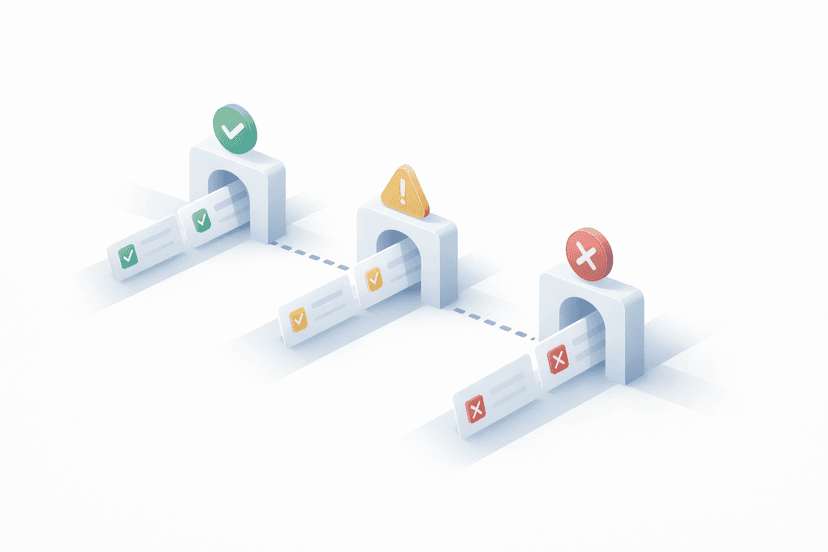
Each check returns a clear result: pass, informational, or blocked. Operators see why an order is or isn't actionable. Not just that it failed.
Inventory-aware preflight For replacement scenarios, the system checks live inventory before allowing the action. No creating replacements that can't ship.
Controlled workflows High-impact actions require explicit confirmation. Dry-run preview before execution. Role-based permissions. Full audit logging.
AI Integration
The tool uses AI to summarize order state in plain language.
Instead of forcing operators to interpret raw data from three systems, the AI synthesizes:
- Current order status
- Fulfillment state
- Shipping updates
- Any discrepancies between systems
This reduces investigation time from minutes to seconds. The operator sees a clear summary and can decide what to do.
The Outcome

For support teams
- Manual cross-referencing
- False alarms in queues
- Unclear decision paths
After implementation
- Faster investigations
- Fewer false alarms
- Clear decision paths
For operations
- Duplicate orders created
- Risky interventions
- Fulfillment churn
After implementation
- Fewer duplicate orders
- Safer interventions
- Reduced fulfillment churn
For leadership
- Noisy metrics
- Unreliable SLA reporting
- Operational ambiguity
After implementation
- Cleaner metrics
- Trustworthy SLA reporting
- Operational clarity
The system explicitly excludes cancelled orders, fully refunded orders, and third-party vendor orders from the overdue queue. These move into informational views, not action queues.
Only orders that are genuinely unfulfilled and within the correct SLA window appear in breach reports.
Why This Exists Now
The previous answer to this problem was "hire more support staff." The reconciliation work was manual, tedious, and unavoidable. Custom tooling would have taken months and required dedicated engineering resources.
We built this in weeks. The AI summarization layer took days. The validation logic was straightforward once the data was accessible.
This is the kind of operational capability that was never worth building before. The economics didn't work. Now they do.
This use case demonstrates how targeted internal tools can transform support operations from reactive firefighting into deliberate, high-confidence decision-making.